

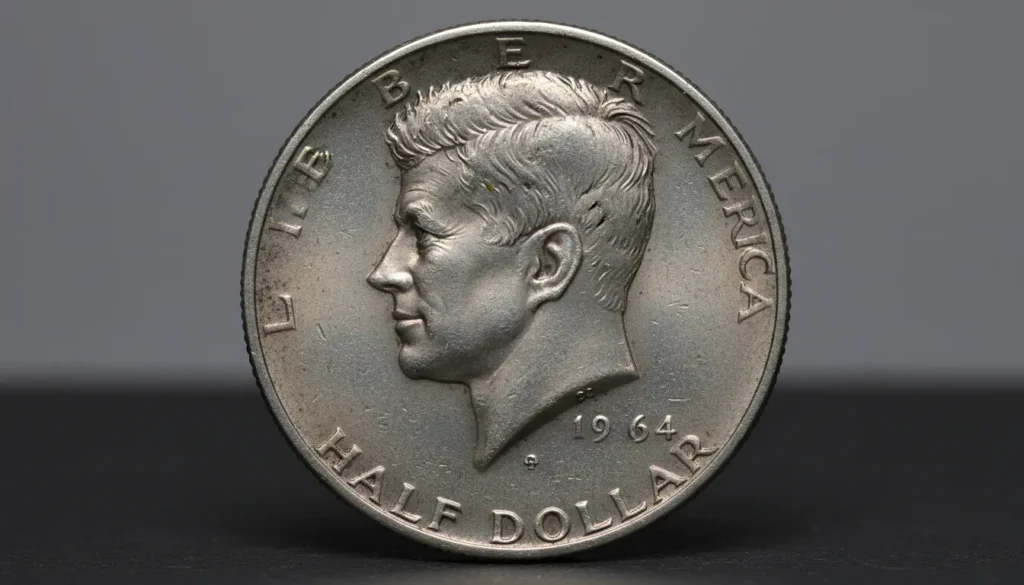
How to Identify the Legendary 9.8M Kennedy Half Dollar
This guide shows practical, step-by-step checks to help you identify a Kennedy Half Dollar that may be unusually valuable or tied to a legendary 9.8M claim. Follow verification steps, avoid quick assumptions, and learn how professionals confirm authenticity.
Start with a careful visual inspection
Work in good light and use a 5x–10x loupe or a low-power microscope. Keep the coin on a soft, clean surface and avoid cleaning it; cleaning can damage value.
Look for clear features on both sides: the obverse portrait of President Kennedy and the reverse eagle design. Note any unusual marks, doubling, or irregularities in the lettering and date.
Check the date and mint mark
Date and mint mark are the first identifiers. They tell you when and where the coin was struck. Some rare varieties or errors are tied to a narrow date range or a specific mint.
Common mint marks for Kennedy halves include D (Denver), S (San Francisco), and no mint mark (Philadelphia for certain years). Record the date and exact mint mark placement before further inspection.
Key features to inspect on a Kennedy Half Dollar
- Obverse details: Kennedy’s hairlines, cheek, and jaw. Weak or doubled features can indicate a doubled die or weak strike.
- Reverse details: the eagle’s feathers, shield lines, and lettering. Die cracks or repunched mint marks often appear here.
- Edge: Kennedy halves usually have a reeded edge. Irregular or altered edges may signal post-mint damage or an error.
- Surface: look for scratches, cleaning marks, or unnatural luster loss which can reduce value.
Identify common error types
High-value Kennedy halves are often error or rare proof / special-strike pieces. Common useful categories to know:
- Doubled Die: doubling on date, lettering, or portrait features visible under magnification.
- Repunched Mint Mark (RPM): multiple impressions of a mint mark slightly offset.
- Die Breaks and Cracks: raised lines or blobs of metal where the die cracked during striking.
- Off-Center Strikes: image shifted from center; severity affects value.
- Special Mint Sets or Proofs: unusual finish or cameo contrast from proof-like strikes.
When provenance and documentation matter
A claimed value in the millions usually depends on provenance and documented sales. Provenance means a documented history of ownership and prior auction records. Without documentation, a high price claim is just a rumor.
Search auction catalogs, grading company census reports, and major auction house records for any referenced coin. Professional verification is essential for high-value claims.
Major coin grading companies maintain online population reports that list how many of a specific variety and grade exist. Checking those reports can confirm rarity and help verify extraordinary value claims.
Get professional grading and authentication
If your inspection shows promising features, submit the coin to a recognized grading service such as PCGS or NGC. These companies authenticate, grade, and encapsulate coins, and they publish population data.
Only submit uncleaned coins. Include clear photos and a description. Be prepared for turnaround time and grading fees; the top-tier authentication process helps establish market trust.
How grading affects value
Grade (the condition of the coin) has a major effect on value. Even rare varieties gain or lose a lot of value depending on the grade assigned by a reputable service.
For error coins, documentation of the error type in the grading report is crucial. A certified error with a strong grade will appear in auction catalogs and price guides.
Small real-world example: a typical discovery and outcome
A homeowner found a Kennedy Half Dollar in an old coin jar while sorting possessions. The coin showed strong doubling on the date and an unusual mint mark impression. The finder took high-resolution photos and then submitted the coin to a reputable grading service.
After authentication, the grading company listed the coin as an error variety and provided a grade. The owner consigned the certified coin to a reputable auction house and received a strong market result relative to typical circulation pieces. This illustrates the pathway from discovery to verification and sale.
Practical checklist before you act
- Do not clean the coin; note its exact condition and photograph it in good light.
- Record date, mint mark, and visible errors or irregularities.
- Consult reputable reference guides and online grading population reports.
- Get professional authentication from a major grading service if the coin appears rare.
- Seek multiple valuations from dealers or auction houses before selling.
Final advice for collectors
Approach any legendary million-dollar claim with caution and demand documentation. Many exciting finds turn out to be common pieces or cleaned items with reduced value.
Use careful inspection, trusted references, and professional authentication to determine whether a Kennedy Half Dollar has rare error status or notable provenance. That is the reliable path to confirming any 9.8M claim.