

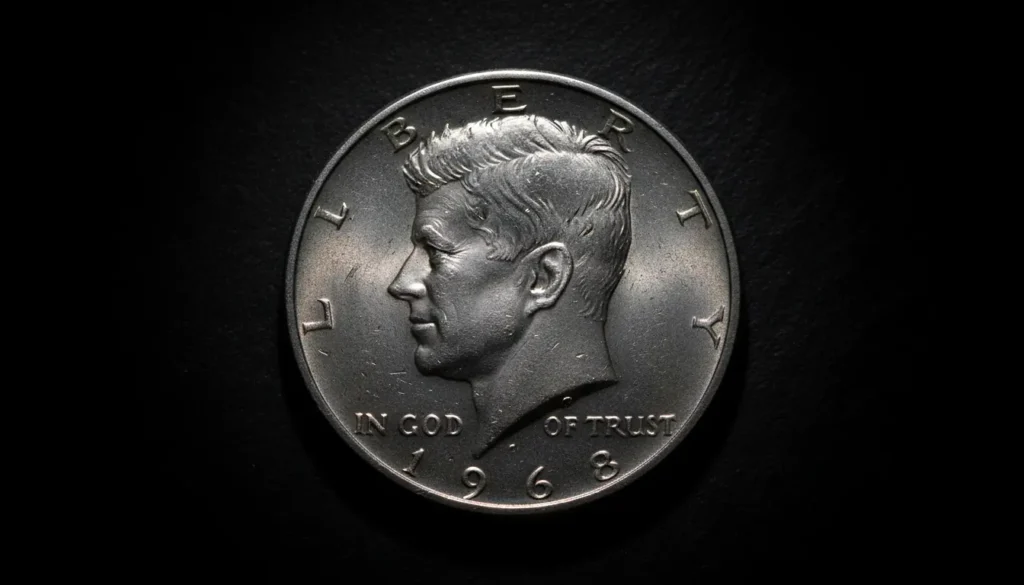
The 1968 Kennedy half dollar is a common yet interesting coin for collectors because it contains 40% silver and was minted the year mint marks returned. This guide explains how that silver content, mint marks, and condition affect market prices. Use the sections below to estimate what collectors are paying today.
1968 Kennedy Half Dollar Values — Silver Content and Melt Value
From 1965 to 1970 Kennedy half dollars were struck in a copper-nickel-clad over a 40% silver core. The total silver weight in each 1968 half is roughly 4.6 grams, about 0.1479 troy ounces.
To calculate the melt value, multiply the current silver spot price by 0.1479. For example, if silver is $25 per troy ounce, the melt (metal) value is about $3.70 per coin. Melt value sets a practical floor for circulated examples, but collector demand and condition push prices above that level.
1968 Kennedy Half Dollar Values — Common Market Ranges
Base-market values depend on condition, mint mark, and whether the coin is a proof. Typical price ranges you can expect at the time of sale are:
- Circulated 1968 (P or D): typically around silver melt value up to about $6–$10 depending on wear and local demand.
- Uncirculated MS60–MS63: often $8–$25, with variability by seller and market conditions.
- Higher uncirculated grades (MS64–MS66): can range $25–$150. Grades above MS65 become progressively rarer and more valuable.
- Proof 1968-S: generally $8–$40 for lower proof grades; deep cameo and high-proof grades command higher prices.
These are general ranges. Exact sale prices fluctuate with silver prices, collector trends, and where the coin sells (online auction, dealer, or private sale).
Mint Marks and Why They Matter
Mint marks returned in 1968 after being absent since 1965. The main marks to look for are P (Philadelphia) and D (Denver). Proof coins bear an S (San Francisco). Collectors often prefer certain mint marks if a particular strike shows stronger details or eye appeal.
Grading and What Collectors Are Paying
Condition—measured by grade—is the biggest single factor in a coin’s collector value. Professional grading by services like PCGS or NGC adds buyer confidence and can increase sale prices for high-grade coins.
Key grade-related points:
- Raw (ungraded) coins sell at a discount compared to the same coin slabbed by a major grading service.
- Grading is most valuable when a coin is near the cutoff between grades (for example, MS64 vs. MS65).
- Proof coins and coins with original mint luster fetch higher premiums when verified as high grade.
Errors, Varieties, and Premium Pieces
Error coins and notable varieties can bring extra premiums. Common error types collectors look for include doubled dies, repunched mint marks, and planchet defects. The market for errors is niche: prices depend on the error type and how prominent it is.
If you believe you have an error coin, get detailed photos and seek an opinion from an experienced dealer or submit the coin to a grading service that documents errors.
The 1968 Kennedy half dollar contains about 0.1479 troy ounces of silver, so its melt value moves with the silver market. That silver content makes even worn examples worth more than face value at most silver prices.
Case Study: A Small Real-World Sale Example
At a regional coin show in 2024, a collector purchased a raw 1968-D Kennedy half dollar that appeared uncirculated but lacked certification. The buyer paid $45 after inspecting luster and strike.
The collector later sent the coin to a major grading company and received MS64. After grading, the coin resold online for $95. This illustrates how certification can increase buyer confidence and asking price, even when the market range for that grade is modest.
How to Buy and Sell 1968 Kennedy Half Dollars
If you are buying, follow these practical steps to avoid overpaying:
- Check recent completed sales on auction sites to see actual sale prices, not just asking prices.
- Compare raw coins to slabbed coins in similar grades to set realistic expectations.
- Ask sellers about provenance, and request clear photos of obverse and reverse under good light.
When selling, consider these tips:
- Clean coins? Don’t clean. Cleaning typically reduces collector value.
- Get high-quality photos and a clear description of grade, mint mark, and any problems.
- For higher-grade coins, slab certification often increases final sale price but subtracts grading fees and time.
Final Practical Takeaways for Collectors
1968 Kennedy half dollars are affordable entries into silver coin collecting because of 40% silver content and plentiful availability. Circulated pieces are usually worth at least melt value, while uncirculated and proof examples bring modest collector premiums.
To get the best price when buying or selling, pay attention to grade, mint mark, and recent comparable sales. If a coin looks near the top of its grade range, consider professional grading to maximize resale value.
Use online marketplaces, auction results, and trusted local dealers to form a realistic price range before making offers or listing coins for sale.