

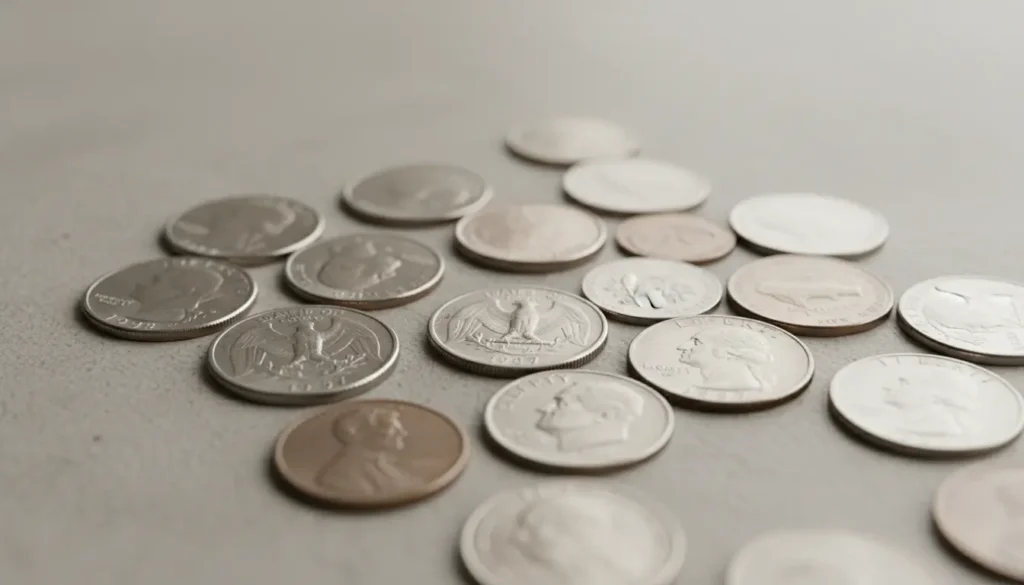
Best U.S. Coins to Look For in Loose Change in 2026
Finding valuable coins in everyday change is a realistic hobby if you know what to look for. This guide lists the top U.S. coins and common error types to target in 2026, with practical steps for identification and next actions.
Why check loose change in 2026
Circulating coin mixes still carry older issues, mint errors, and special varieties that can be worth more than face value. A focused search and a few basic tools increase your chance of success.
Top coins to watch for in loose change
Start with the coin types that most often appear in circulation and have collectible varieties. These are realistic to find while handling daily transactions.
- Pennies (Lincoln cents) — Look for pre-1982 copper composition pennies, classic doubled dies (1955), and known mint error varieties.
- Nickels — Jefferson nickels from 1938–1964 and wartime silver nickels (1942–1945) can be valuable if found in good condition.
- Dimes, Quarters, and Half Dollars — Pre-1965 dimes, quarters, and half dollars are 90% silver and worth more than face value for metal alone.
- State and National Park Quarters — Look for doubled dies, repunched mint marks, and low-mintage varieties like the 2004 Wisconsin extra leaf variety.
- Dollar coins — Sacagawea and Presidential dollar issues sometimes show mint varieties or errors that attract collectors.
Key error types and varieties to identify
Knowing the error types helps you decide which coins are worth a closer look. Not every odd mark is collectible, so focus on clear die errors and double strikes.
- Doubled die obverse or reverse — doubling of lettering or portrait details is a classic collectible error.
- Off-center strikes — partial designs missing from the edge can be desirable if the shift is significant.
- Die cracks and cuds — raised lines or blobs where the die failed are common and may add minor premium.
- Clipped planchets and broadstrikes — missing edge segments or unusually wide strikes are easy to spot and collectible.
How to examine coins you find
Use a simple process to sort loose change quickly and decide what to keep for closer inspection.
- Use bright light and a 10x magnifier to inspect dates, mint marks, and lettering.
- Weigh suspicious coins on an inexpensive digital scale when metal content is a question.
- Compare suspect coins to reference photos from trusted sites or a printed price guide.
- Keep a checklist: date, mint mark, apparent error, and condition.
Tools to carry or keep at home
You do not need expensive equipment to start. A few affordable items will make identification faster and more reliable.
- 10x jeweler’s loupe or magnifier
- Small digital scale (measures to 0.01 g)
- Soft cloth and a flip or envelope for safe storage
- Printed checklist or smartphone bookmarks to reference common varieties
Practical steps after you find a candidate
If you identify a potential valuable coin, follow a clear verification path before selling or listing it.
- Document the coin with clear photos of both sides and the edge.
- Check references: reputable coin guides, PCGS or NGC online resources, and specialized variety databases.
- Get professional authentication for high-value finds before attempting to sell.
- Use a trusted dealer, auction house, or graded-service listing site for sale.
Case study: How a simple check paid off
A casual finder pulled a worn quarter from a jar and noticed unusual leaf details near the eagle. They photographed the coin, compared it to a known 2004 Wisconsin extra leaf photo, and confirmed the similarity. After local dealer authentication the coin was sold to a collector who valued the extra-leaf variety higher than face value.
The important steps were careful documentation, reference comparison, and getting a second professional opinion before sale.
What to avoid and safety tips
Avoid costly mistakes by not assuming value without verification and by protecting coins from damage.
- Do not clean coins with chemicals or abrasives; cleaning destroys numismatic value.
- Avoid quick sales to unknown buyers for large-sum coins; seek multiple opinions.
- Be cautious about online listings; use secure payment and shipping methods for valuable transactions.
Final checklist for coin searches in 2026
- Scan all coins for pre-1965 dates (silver dimes/quarters/halves).
- Look closely at pennies for doubled dies and composition differences (pre/post-1982).
- Check state and commemorative quarters for minting varieties and doubled dies.
- Use a magnifier, document finds, and consult references before selling.
Searching loose change can be rewarding and educational. With a few tools, patience, and the right references, you can spot the Best U.S. Coins to Look For in Loose Change in 2026 and know how to verify and protect them.