

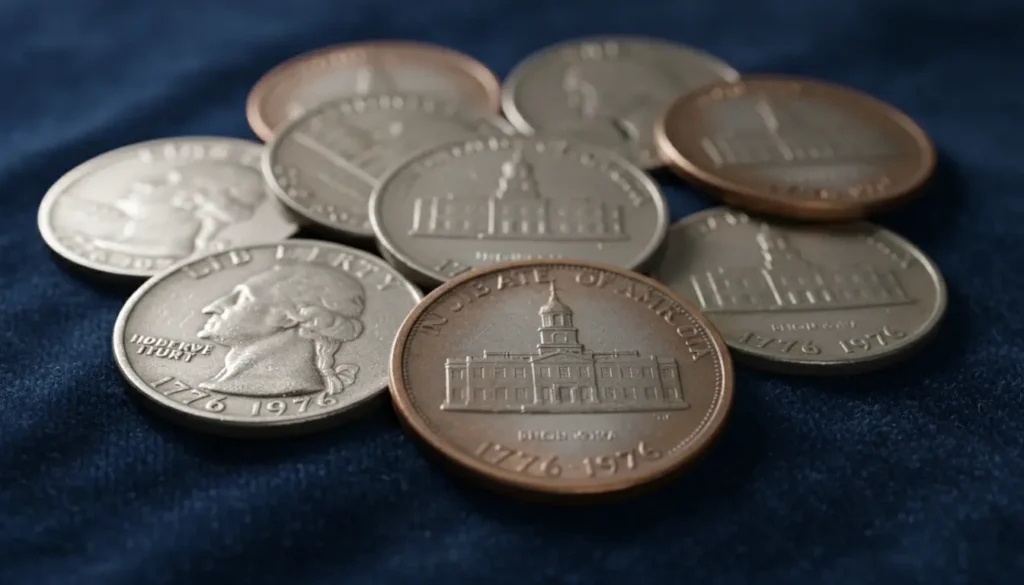
The 1976 Bicentennial coinage — quarters, half dollars, and dollars bearing the dual date 1776–1976 — was produced in very large numbers for circulation and special sets. Most pieces are common and inexpensive, but a few Bicentennial coins are worth protecting rather than spending. This guide explains what to look for and how to preserve potential value.
Why some Bicentennial coins are rare and valuable
Not all Bicentennial coins are equal. Rarity and value come from low mintage, special metal composition, mint errors, and high surviving condition. Knowing these categories helps you decide which coins to keep.
1976 Bicentennial silver issues and mint sets
Alongside the regular copper-nickel clad circulation coins, the U.S. Mint sold special proof and uncirculated sets that included coins struck in 40% silver. These were marketed to collectors and usually carry an S mint mark for San Francisco or are identified as silver-clad proof coins.
Silver-clad Bicentennial coins are often worth more than their clad counterparts because of silver content and collector demand. Keep these separate and stored safely.
Error coins and unusual varieties
Minting errors can create rarity. Varieties to watch for include doubled dies, off-center strikes, broadstrikes, planchet defects, and die clashes. Even a small, visible error can make a common date coin much more valuable to collectors.
Rare Bicentennial Coins You Should Never Spend
Here are the main types of Bicentennial coins you should not casually spend. Check the coin carefully before using it in everyday transactions.
- 40% Silver Proofs and Uncirculated Coins: Found in special mint sets, these are usually marked as silver issues and were sold in protective packaging.
- San Francisco Proofs (S mint mark): Proofs from the San Francisco Mint can carry premium value when preserved in original packaging or when graded highly.
- Bicentennial Eisenhower Dollars in Silver: Dollar coins struck for the Bicentennial include special silver issues; these often attract collectors more than standard clad dollars.
- Major Mint Errors: Off-center strikes, doubled die obverse, broadstrikes, and clipped planchets can be significantly valuable compared with normal examples.
- High-Grade Circulation Strikes: Coins that remain in mint state condition (MS63 and above) are rare for circulation strikes and deserve inspection or grading.
How to identify valuable Bicentennial coins
Begin with a visual inspection and simple tests that do not harm the coin. Use a magnifying glass and good lighting. Look for the S mint mark, the dual date 1776–1976, and any obvious imperfections in strike or planchet.
Checklist to inspect a Bicentennial coin
- Does it have an S mint mark? (Often indicates proof from San Francisco.)
- Is the coin a different color or heavier? (May indicate silver content.)
- Are there doubling marks on the date or letters? (Possible doubled die.)
- Is the strike off-center or incomplete? (Major error.)
- Is the surface unusually smooth or marked by die clashing? (Variety indicator.)
Preservation and next steps for suspected rare coins
If you find a coin that matches one of the rare categories, stop using it and store it properly. Use acid-free holders, coin flips, or hard plastic slabs. Avoid cleaning the coin; cleaning can destroy value.
For coins that appear to be errors or high-grade silver pieces, consider professional grading. Reputable services include PCGS and NGC. Grading provides authentication and can increase marketability.
Where to get a coin appraised or graded
- Local coin dealer with good reviews and membership in professional associations.
- Coin shows, where many dealers and experts gather for quick opinions.
- Submit directly to a recognized grading service for a formal grade and certification.
The U.S. Mint produced special 40% silver Bicentennial coins for collectors, separate from the widely circulated copper-nickel coins, and those silver examples are frequently the most valuable Bicentennial pieces.
Real-world example: A small estate find
A collector bought an estate box of old coins and found several 1976 quarters still in plastic sleeves. One coin, labeled from a San Francisco proof set, showed a deep mirror-like field and sharp devices. The collector had the coin graded and it received a high proof grade.
The official grade confirmed the coin as a silver proof from a mint set, and authentication made it easy to sell to a specialist dealer. The sale netted several times the value of a common circulated quarter, illustrating the importance of identification and proper grading.
Common mistakes to avoid
- Avoid spending coins from old boxes or labeled mint sets without inspecting them first.
- Don’t clean coins to make them look nicer; cleaning reduces value and may invalidate authenticity in the eyes of graders.
- Don’t assume every 1976 coin is rare; most are common and were minted in large numbers.
Final practical tips for collectors
Keep a simple reference guide or phone app handy for quick checks while sorting coins. Photograph any suspected rare coins and note where they were found and the coin’s condition.
When in doubt, seek a second opinion from a reputable dealer or a grading service. Protect potential value by storing coins properly and avoiding any treatment that could harm their surfaces.
By learning to recognize silver issues, mint marks, and error varieties, you can avoid spending coins that might be worth far more than face value. Treat any unusual Bicentennial coin with care until you can confirm its identity and condition.