

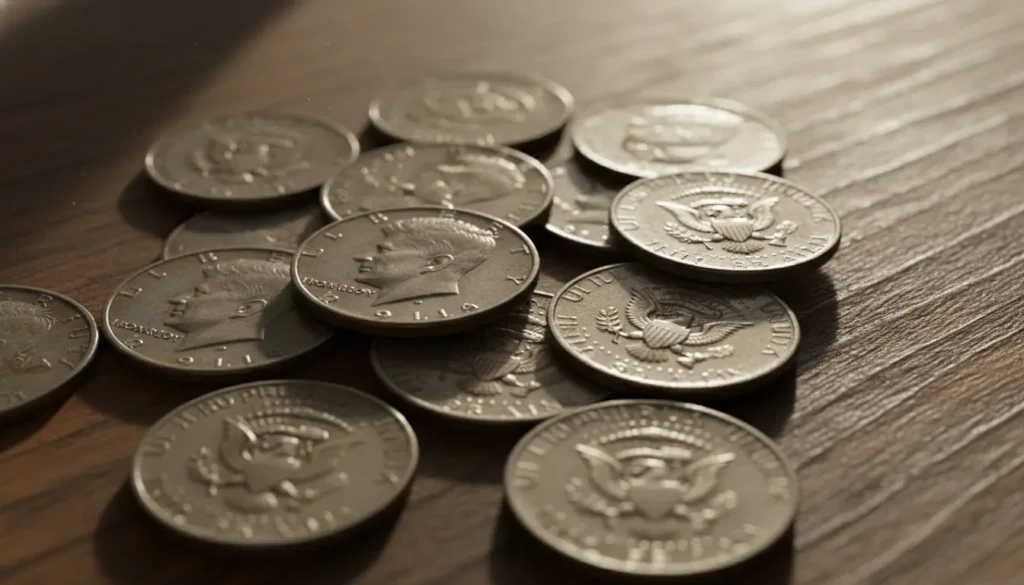
How to Tell Which Kennedy Halves Are Valuable
Kennedy half dollars are common in pocket change, but a few years and varieties carry strong value for collectors and investors. Value depends on year, mint mark, silver content, condition, and rare errors.
This guide explains the most valuable Kennedy halves by year and what to look for when evaluating a coin.
Top factors that determine value for Kennedy halves
Before focusing on specific years, understand the main value drivers. These determine whether a half is worth face value, melt value, or a premium to collectors.
- Year and mint mark — Some dates had lower mintages or are more sought after.
- Silver content — Earlier Kennedy halves contain silver; that sets a baseline melt value.
- Condition (grade) — Uncirculated and high-grade coins can sell for large premiums.
- Proofs and special strikes — Proofs, cameo proofs, and Special Mint Set pieces are collectible.
- Errors and varieties — Struck-through, doubled dies, and off-center errors can be valuable.
Which Kennedy halves are most valuable by year
Most value falls into two groups: the early silver issues and certain modern rarities or errors. Here are the key years to watch.
1964 Kennedy halves
The 1964 Kennedy half is the most important year for most collectors because it is the only regular-issue Kennedy half struck in 90% silver. That gives it intrinsic melt value plus collector interest.
High-grade 1964 business strikes and proofs command premiums. Look for sharp details, full hairlines, and original luster when assessing value.
1965–1970 Kennedy halves (40% silver)
From 1965 through 1970, half dollars contained 40% silver. These coins have lower silver content than 1964 pieces but still carry melt value above face value.
They are common in circulated grades, but uncirculated and proof examples can be worth collector premiums.
1971 and later (clad halves)
After 1970 the composition switched to copper-nickel clad and general business strikes became common. Most post-1970 halves are worth face value unless they are rare mint-state pieces, proofs, or error coins.
Collectors focus on condition and special mint issues for these later dates, rather than metal content.
Key mint marks and rare varieties to check
Mint marks can affect value, but for many Kennedy halves the mint mark differences are subtle. Still, some varieties matter more than the mark itself.
- Proof vs business strike — Proofs (usually from San Francisco) often have a higher value.
- Mint errors — Look for repunched mint marks, doubled dies, and off-center strikes.
- Special Mint Sets — Certain SMS coins from the 1960s and 70s are collectible.
How to estimate melt value for silver Kennedy halves
Silver melt value provides a baseline for 1964 and 1965–1970 halves. For 1964 (90% silver), the coin contains roughly 0.36 troy ounces of silver.
To estimate: multiply current silver price per troy ounce by the coin’s silver content. This gives a minimum value for a circulated silver Kennedy half.
1964 Kennedy halves are 90% silver, while 1965–1970 halves contain 40% silver. That difference makes 1964 pieces worth significantly more by metal content alone.
Condition and grading: where collectors pay the most
Condition is often the largest multiplier on value. Coins graded MS65 or higher can sell for many times melt value, especially for 1964 business strikes and proofs.
If you suspect a high-grade coin, consider professional grading from a reputable service. Grading removes most uncertainty when selling to collectors or at auction.
Small case study: Finding a 1964 in a coin jar
A local collector found a 1964 Kennedy half in a jar of coins and took it to a coin show for evaluation. The coin had strong luster and minor contact marks consistent with AU/uncirculated condition.
After professional grading the coin was listed for auction. The sale price exceeded the silver melt value by several hundred dollars due to its high grade and eye appeal. This shows how condition turns a common year into a higher-value piece.
Practical tips for buyers and sellers of Kennedy halves
- Check the date and mint mark first; then assess wear and luster.
- Weigh your coin or compare details to images to confirm silver content if identification is unclear.
- Use current silver prices to set a minimum price for 1964 and 1965–1970 halves.
- Consider professional grading for coins you think might be MS65 or higher.
- Watch auctions and price guides to track real-world selling prices for specific grades and varieties.
Final checklist: Which Kennedy halves to keep or sell
Focus on these items when sorting a collection or change jar: 1964 coins, 1965–1970 silver halves, proof coins, high-grade pieces, and any coins with visible errors. These are the most likely to be worth more than face value.
Most modern clad halves are best left in circulation unless they grade extremely high or are known error varieties.
Armed with these rules you can quickly identify promising Kennedy halves and decide when to sell, hold, or submit a coin for grading.