


Many everyday coins still in pockets and cash drawers can be worth more than face value. This guide explains the most underrated valuable coins in circulation, how to spot them, and what to do if you find one.
Why these are the most underrated valuable coins in circulation
Some coins gain value from metal content, rare minting errors, or low-production varieties. Because they look ordinary, people often spend or overlook them.
Knowing the common types and basic identification steps gives you a practical advantage when sorting change or checking a pocketful of coins.
Top underrated valuable coins in circulation to watch
Here are coin types that commonly turn up and are worth checking. Each entry includes what makes it valuable and quick ID tips.
Pre-1982 Lincoln pennies
Why valuable: Pennies minted before 1982 are mostly copper and can be worth more for their metal content and to collectors.
How to spot: Look for dates 1982 and earlier. Very worn dates may require magnification to read.
Dimes and quarters dated 1964 and earlier
Why valuable: Dimes and quarters dated 1964 and earlier are 90% silver, giving them intrinsic metal value far above face value.
How to spot: Check the date—1964 or earlier. Silver coins are generally lighter in color and not magnetic.
Kennedy half dollars (1964 and 1965–1970)
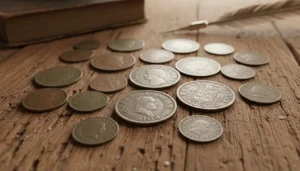
Why valuable: 1964 halves are 90% silver. Halves dated 1965–1970 contain 40% silver and still command collector interest and melt value.
How to spot: Look for the date and check the edge for reeding and the coin’s color. Use a magnet to test for base metals—silver is non-magnetic.
Error coins and doubled dies
Why valuable: Minting errors like doubled dies, off-center strikes, and clipped planchets are often rare and sought by collectors.
How to spot: Use a magnifier to inspect lettering and design. Look for doubled dates or doubling in the motto and portrait.
State and commemorative quarter varieties
Why valuable: Some state quarters have recognized varieties or low-mintage striking errors that raise collector interest.
How to spot: Check the reverse details and mint mark closely. Small differences like extra leaves, doubled features, or misplaced elements are clues.
How to identify underrated valuable coins in circulation
Follow a consistent, low-cost approach to testing and identifying potential finds. These steps help you rule out common coins and highlight pieces worth further research.
- Visual inspection: Read the date and mint mark with a magnifier.
- Color and weight: Silver and copper coins have distinctive color and heft.
- Magnet test: If a coin sticks to a magnet, it’s not silver or pure copper.
- Look for errors: Check letters, edges, and portraits for doubling or misalignment.
- Photograph and document: Record the date, mint mark, and any unusual features before handing it over.
Tools to keep handy
- 10x magnifier or loupe
- Simple digital scale (grams)
- Small magnet
- Reference book or reputable online price guide
Many circulated coins still contain precious metals: dimes and quarters dated 1964 or earlier are 90% silver. A single silver quarter can be worth several times its 25-cent face value because of its metal content.
What to do if you find one of the underrated valuable coins in circulation
When you suspect a coin is valuable, follow these practical steps to avoid losing value and to get an accurate assessment.
- Do not clean the coin—cleaning can reduce value dramatically.
- Photograph both sides and note where you found it and the date you discovered it.
- Consult a reputable price guide or an experienced coin dealer for a preliminary valuation.
- For high-value or rare error coins, consider professional grading before selling.
Where to sell or get a valuation
Local coin shops, certified appraisers, and established auction houses are good starting points. Online marketplaces are useful, but take time to verify buyers and recent sale prices.
Real-world example: A teller who checked a half dollar
A bank teller found a worn half dollar in a batch of returned coins. The date was faint but readable as 1964. The teller photographed the coin and checked a price guide, learning the silver content made it worth well above face value.
The teller brought the coin to a local dealer, who confirmed it as a 90% silver Kennedy half. The teller sold it for several times the face value instead of spending it, illustrating the practical payoff of a quick check.
Practical tips for routine coin checks
- Check change daily or weekly—small habits catch more finds over time.
- Keep a magnifier on your keyring or at your checkout area if you work with cash.
- Join local coin groups or online forums to learn about new varieties and current prices.
Underrated valuable coins in circulation are more common than many assume. With a few simple tools and a bit of time, you can spot coins worth researching further. Follow the practical steps above and consult experts before selling to ensure you receive fair value.