

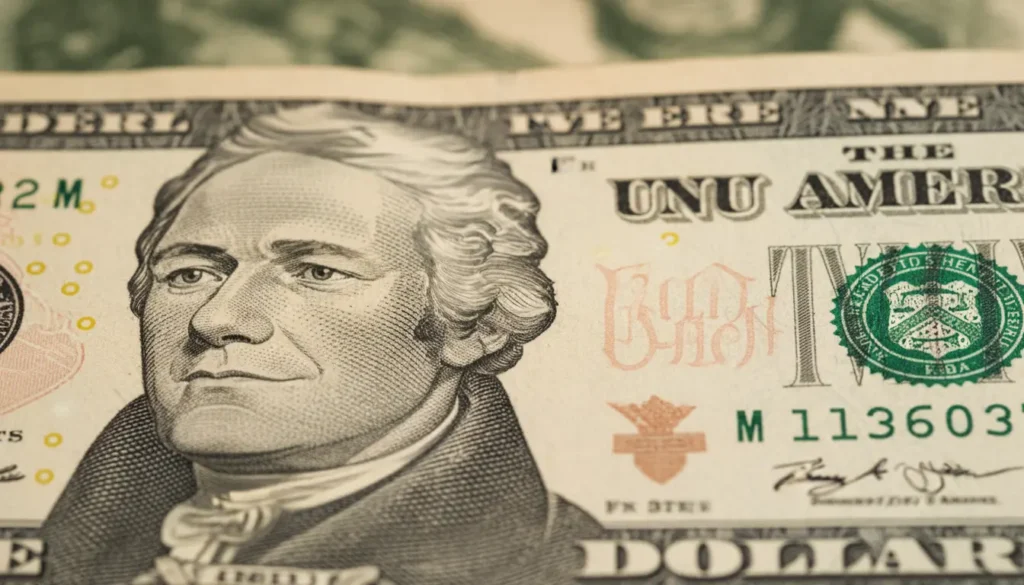
Why misprinted $10 bills still appear in circulation
Occasional production errors can let misprinted notes escape from sorting and quality control. Most faulty notes are removed, but a small number reach banks, businesses, and wallets.
These bills remain legal tender unless deliberately altered or defaced. Knowing how to identify misprinted $10 bills helps you protect yourself, spot collectibles, and report significant issues.
How to identify misprinted $10 bills
Start with a basic visual and tactile inspection. Check for obvious problems first, then move to closer comparisons and verification steps.
Quick checklist for spotting misprints
- Misaligned printing where portraits, seals, or numbers don’t line up correctly
- Missing elements such as serial numbers, Treasury seal, or part of the portrait
- Double prints or ghost images showing offset repeats of design elements
- Off-color ink or areas that are much lighter or darker than normal
- Blank spots where ink failed to transfer to the paper
- Cutting or registration errors where one side does not match the other
Examples of common misprints on $10 bills
Not every oddity is a rare error. Here are some common types and what they look like.
- Off-center printing: The design is shifted toward an edge, creating uneven margins.
- Overprint misregistration: The green Treasury seal or serial number is printed slightly off its intended alignment.
- Missing or partial serial numbers: One or both serial numbers are faint or absent.
- Ink smears and streaks: Unintentional smudging from a printing pass.
Step-by-step inspection method
Follow these practical steps when you suspect a misprinted $10 bill.
- Compare with a known good bill. Use a good-condition $10 bill as a reference for alignment, color, and design placement.
- Examine under good light. Use daylight or a bright lamp to see subtle ink differences and registration shifts.
- Check both sides. Some errors appear only on the reverse or are the result of mismatched front and back registration.
- Look at serial numbers and seals. Verify both serial numbers are present, matching in font and placement, and that seals are fully printed.
- Use a magnifier. A 10x loupe will reveal microprinting issues and tiny registration errors that the naked eye might miss.
Verifying authenticity versus misprint
Misprints are different from counterfeits. A misprinted genuine bill retains security features the counterfeit might lack.
Check the same security features you would for any bill: watermark, security thread, color-shifting ink, and microprinting. If those features are present and correct, the note is probably authentic but misprinted.
When a misprinted note might be counterfeit
If a suspected misprint also has missing or incorrect security features, do not treat it as a collectible. Report it to your bank or the appropriate authorities and avoid using it commercially.
What to do when you find a misprinted $10 bill
Decide whether the note is a curiosity, a collectible, or potentially fraudulent. Follow these practical steps.
- If you need to spend it, most banks will accept misprinted notes and may replace them if they are deemed unfit.
- Take it to your bank for inspection. Banks can escalate unusual notes to the Bureau of Engraving and Printing or the Federal Reserve for review.
- If you think it is a valuable error, avoid excessive handling and store it flat in a protective sleeve to preserve condition.
- Consider contacting a reputable currency dealer or error note expert for an appraisal if the error seems significant.
When is a misprinted $10 bill worth more?
Collectors value error notes for their rarity, visibility of the error, and condition. Dramatic errors like missing overprints, major off-center printing, or significant double impressions often attract premiums.
Minor smudges or small ink variations usually have little collector value and are treated like worn notes.
Occasional misprinted U.S. bills can escape official quality checks and enter circulation. Error notes that are authentic remain legal tender and may be worth more to collectors depending on the type and clarity of the error.
Real-world example: a small case study
A convenience store cashier noticed a $10 bill with a faint serial number and a missing portion of the green Treasury seal. The bill passed basic security checks but looked unusual.
The cashier took the bill to a local bank. Bank staff compared it with a reference note and contacted their Federal Reserve representative. The note was confirmed as a misprint from production and returned to the finder with a brief report. A collector later purchased the bill for a moderate premium because the error was clear and well preserved.
Reporting and documenting misprinted bills
Document any misprinted note before transferring it. Take clear photos showing both sides and note where and when you received it.
For significant errors, report the find to your bank or the Bureau of Engraving and Printing for authentication. Keep receipts and correspondence if you intend to sell or insure the note.
Practical tips and final checklist
- Always check security features first to rule out counterfeiting.
- Use a known-good bill for side-by-side comparison.
- Limit handling to preserve condition if you think the note has collector value.
- Contact your bank for verification and possible replacement.
- Document the find with photos and notes about where you received the bill.
Identifying misprinted $10 bills requires careful observation and a methodical approach. With the right checks, you can tell a genuine production error from damage or fraud, decide when to report it, and recognize notes that might interest collectors.