

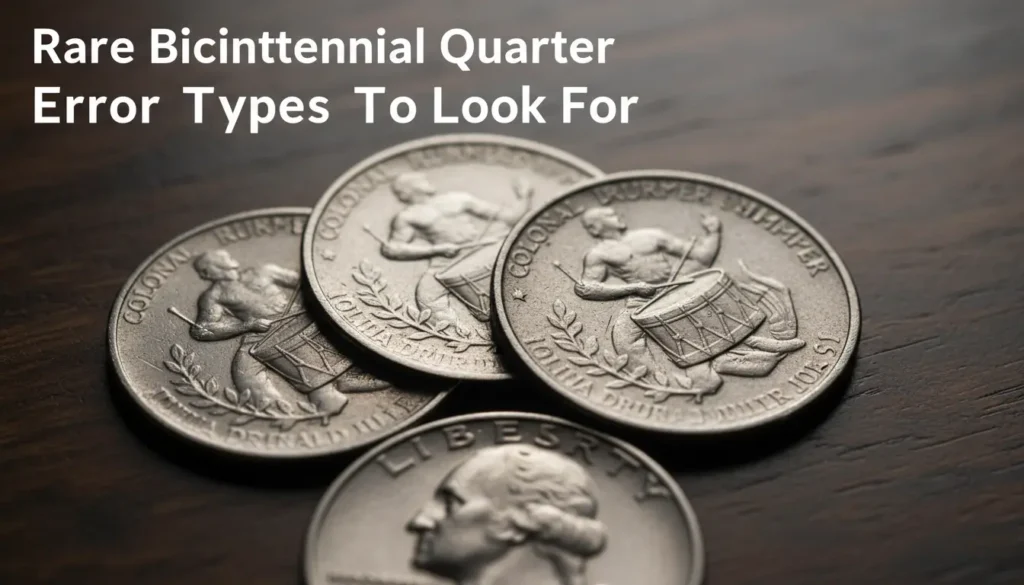
Collectors who inspect 1976 Bicentennial quarters can find notable mint errors that raise interest and value. This guide explains common and rare error types, how to spot them, and practical next steps if you find one.
Rare Bicentennial Quarter Error Types to Look For
Knowing what to look for helps you separate chance finds from true rarities. Below are the most important error types for the 1976 Bicentennial quarter series.
Off‑Center Strikes
Off‑center strikes happen when the planchet is not aligned under the die during striking. These can range from slight to dramatic and affect how much of the design is visible.
- Look for missing portions of Washington or the eagle/back design.
- Degree of off‑center (measured in percent) heavily influences value.
- Check the edge for partial collars or compressed rims.
Double Die and Die Doubling
Double die errors occur when a die receives multiple impressions with slight rotation or shift. This creates doubled features on obverse or reverse elements.
- Common signs: doubling on letters, date, or portrait features.
- Use magnification to inspect lettering like UNITED STATES or QUARTER DOLLAR.
- Differentiate true doubled die from machine doubling (flat, shelf‑like doubling on devices).
Clipped Planchets and Broadstrikes
Clipped planchets are missing a curved portion of the coin where the blank was cut improperly. Broadstrikes happen when a coin is struck without a properly seated collar; the coin appears flattened and wider.
- Clipped planchets show a smooth, curved blank edge missing design.
- Broadstrikes display expanded rims and softer detail due to spread metal.
- Document the coin’s diameter and thickness for broadstrike verification.
Die Cracks, Cuds, and Struck‑Through Errors
Die cracks and cuds are raised lines or blobs on the coin surface caused by damage to the die. Struck‑through errors appear where foreign material on the die prevented full contact.
- Die cracks often radiate from devices or rim toward the center.
- Cuds are missing pieces of design near the rim caused by die breakage.
- Struck‑through errors may leave depressions, hairlines, or hairlike marks.
How to Inspect and Verify Error Types
Start with simple tools: a 5–10x loupe, a soft light, and ruler or calipers. Proper inspection separates genuine mint errors from damage or post‑mint alteration.
Step‑by‑Step Inspection
- Clean hands and steady surface; do not attempt to clean the coin.
- Use a loupe and bright directional light to inspect edges and devices.
- Measure diameter and weight for broadstrike or clipped planchet verification.
- Compare to reference images or published error guides for matching patterns.
- If unsure, photograph the coin at macro scale and seek a second opinion.
Authentication and Grading
If you believe the quarter has a significant error, authentication by a reputable third party is recommended. Grading services can certify error types and assign an authoritative grade.
- Submit to major services that evaluate errors rather than just surface condition.
- Keep provenance and clear images for auction or resale.
- Know that market value depends on rarity, eye appeal, and demand.
The 1976 Bicentennial quarter features a unique dual date design reading 1776–1976, and coins were produced at Philadelphia, Denver, and San Francisco that year. Errors can be found across all mint marks.
Practical Selling and Collecting Tips
When selling or trading, clear documentation and professional photos increase buyer confidence. Start with local coin clubs or online specialist forums to gauge interest.
- Obtain at least two independent opinions before expensive grading fees.
- Consider regional auctions or specialist dealers for better error‑coin visibility.
- Keep coins in inert holders to preserve condition pending sale.
Real‑World Example
A collector found a heavily off‑center 1976‑D Bicentennial quarter in circulated change. After photographing the coin and posting images to a regional numismatic forum, the collector learned the piece matched known off‑center patterns. The coin was authenticated locally and later sold through an auction house for several hundred dollars, well above face value.
This case shows the value of documenting finds, seeking expert feedback, and choosing the right sale channel.
Summary: What to Remember
Focus on these steps: inspect carefully, identify the error type, seek authentication for high‑value finds, and use trusted channels to sell. Many valuable Bicentennial quarter errors are subtle, so patience and careful study pay off.
Use a loupe, compare to references, and when in doubt, ask experienced collectors or professionals. That approach will help you spot rare Bicentennial Quarter error types worth keeping or selling.