

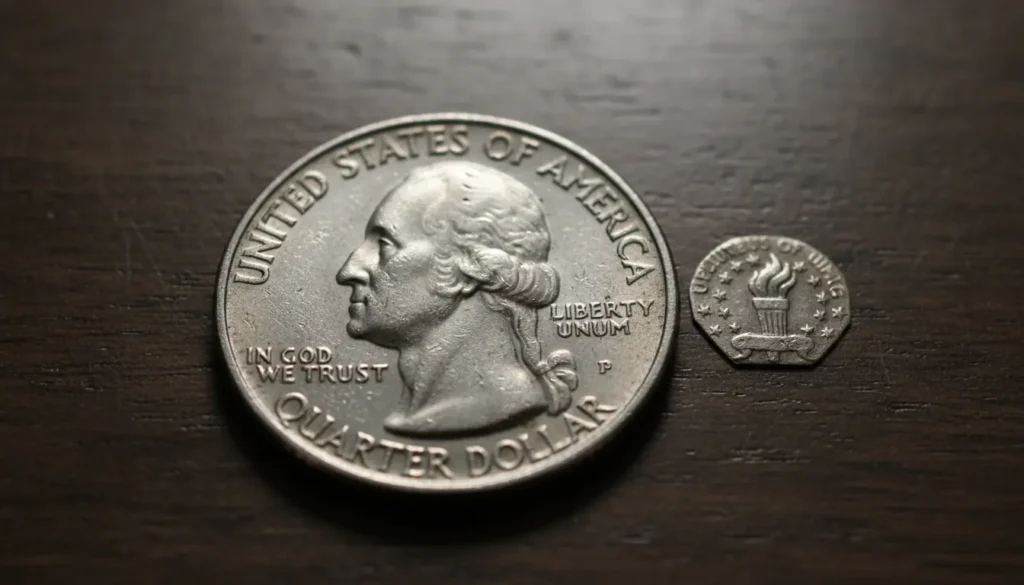
Why the $2.5 Billion Bicentennial Quarter Claim Is Suspicious
Stories about a single Bicentennial quarter being worth $2.5 billion have circulated online for years. These claims are almost always unsupported, sensational, and driven by social media sharing rather than verifiable sales records.
No reputable auction house or numismatic registry documents a sale anywhere near that value for a Bicentennial quarter. While some rare coins reach high prices, a $2.5 billion sale would be unprecedented and widely reported by major coin experts.
What Is a Bicentennial Quarter?
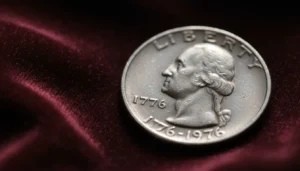
A Bicentennial quarter is a 1976 Washington quarter with the special reverse celebrating the 200th anniversary of American independence. The reverse shows a colonial drummer and the dual date 1776–1976.
They were issued for general circulation and also in collector sets, including some silver proofs intended for collectors. Most circulated Bicentennial quarters are common and worth only face value or modest premiums.
How to Identify a Potentially Valuable Bicentennial Quarter
Finding a rare or valuable Bicentennial quarter means knowing what to look for. A basic inspection will separate ordinary coins from ones worth further investigation.
- Check the date and design: 1776–1976 and the drummer reverse are required.
- Look for mintmarks: D (Denver) or S (San Francisco) indicate where it was struck.
- Examine condition: uncirculated coins have sharper details and command higher prices.
- Search for obvious errors: off-center strikes, double dies, clipped planchets, or irregular edges can be valuable.
- Silver content: certain 1976 proof/unclad pieces were produced with 40% silver and typically came in collector sets.
Tools to Help
Use a magnifying glass, a loupe (10x), and a soft cloth to clean away loose dirt (do not polish). Compare the coin to reference photos from trusted numismatic guides.
Common Valuable Bicentennial Quarter Types
Most Bicentennial quarters are common, but a few types tend to attract collector interest:
- Silver-clad proof quarters from San Francisco (collector sets).
- High-grade uncirculated (MS65 and above) business strikes with exceptional eye appeal.
- Coins with clear minting errors: off-center strikes, double dies, or clipped planchets.
Even so, values for these items generally range from modest premiums to several thousand dollars for exceptional error coins or top-graded pieces—not billions.
How to Verify Value: Practical Steps
If you suspect you have an uncommon Bicentennial quarter, follow these practical steps to verify its value safely.
- Document the coin with clear photos of both sides under good light.
- Compare to price guides and auction records from reputable sources (PCGS, NGC, Heritage Auctions).
- Ask for opinions in coin-collecting forums, but prioritize verified grading opinions.
- Consider professional grading from PCGS or NGC if the coin looks unique or is in exceptionally high grade.
What To Do If You Find a Rare Bicentennial Quarter in Your Change
Do not clean, file, or otherwise alter the coin. Any damage will reduce collector value dramatically.
Instead, store it in a soft coin flip or holder and seek a professional appraisal. A local reputable coin dealer or certified grader can give you a documented opinion.
Some 1976 quarters were included in 40% silver collector sets. These silver-clad quarters are easy to identify by their brighter, slightly different tone compared with regular copper-nickel clad quarters.
Case Study: A Realistic Example
A hobbyist emptied a jar of coins and noticed a Bicentennial quarter with unusually sharp luster and an off-center strike about 5% off. They photographed the coin and posted the images to a reputable numismatic forum.
Forum members recommended third-party grading. After grading, the coin received a mid-range certification as an error strike attractive to collectors; it sold through a specialized auction for a price well above face value but within normal market expectations for error coins.
This small example shows the realistic path: identify, document, seek opinions, and use grading if warranted. It also demonstrates that while fortunate finds can be profitable, they typically produce sensible, not astronomical, returns.
Avoiding Scams and Hype
Online posts claiming extreme values without documentation are usually clickbait. Be skeptical of claims that a single common-date coin could be worth more than major historical treasures.
Before selling or paying for authentication, check credentials of the buyer or grader, read recent auction results for similar coins, and get multiple opinions if the valuation appears unusually high.
Resources and Final Tips
Reliable resources include professional grading services (PCGS, NGC), established auction houses, and reference books by major numismatists.
- Keep coins in inert holders to avoid damage.
- Use trusted dealers with good reviews and accreditation.
- Keep clear records and receipts if you decide to sell.
In short, the $2.5 billion Bicentennial quarter story is a myth. Rare Bicentennial quarters do exist and can be worth money, but realistic values are consistent with documented sales and grading records. If you find a Bicentennial quarter you think is special, document it, research carefully, and consult verified experts.