

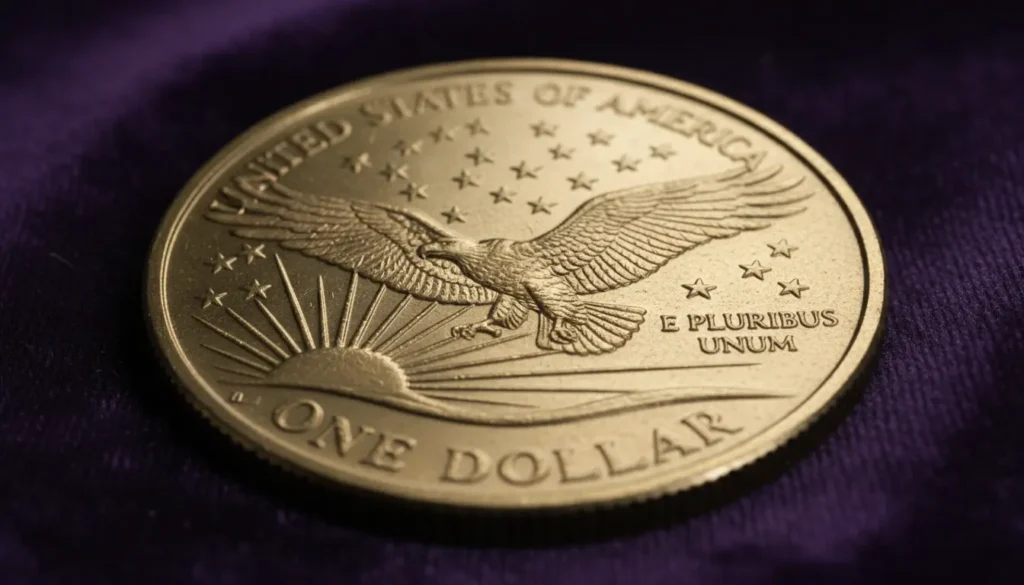
Understanding Sacagawea Dollar Eagle Reverse Errors
Sacagawea Dollar Eagle reverse errors refer to visible problems or anomalies on the eagle side of the Sacagawea one-dollar coin. These errors range from small die chips to dramatic broadstrikes or doubled dies that change the coin’s appearance.
Collectors prize some errors because they are rare or visually striking. But not all errors add market value; context and condition matter.
How Sacagawea Dollar Eagle Reverse Errors Occur
Errors usually result from problems in the die, press, or planchet during production. The eagle reverse faced the same production risks as any coin face: wear to dies, misalignment, and foreign material in the die cavity.
Most visible reverse errors form before the coin leaves the mint, while post-mint damage does not count as a true mint error and rarely increases value.
Common Types of Sacagawea Dollar Eagle Reverse Errors
Knowing the common error types helps you separate collectible anomalies from damage or normal variation.
- Die cracks and die breaks — Raised lines or lumps where the die has fractured.
- Die chips and cuds — Small raised blobs of metal from a damaged die edge.
- Doubling — Two images from a misaligned or doubled die, often subtle.
- Broadsrtrikes and off-center strikes — Planchet or collar failures that alter the coin’s outline or inset features.
- Clashed dies — Ghost images from dies that struck each other without a planchet between them.
- Planchet flaws — Laminations, cracks, or laminations that remove metal from the surface.
How Much Are Sacagawea Dollar Eagle Reverse Errors Worth?
Value depends on rarity, eye appeal, and market demand. Minor die cracks usually bring small premiums, while dramatic, documented errors can be worth hundreds or more to the right buyer.
Expect wide price variation. Two similar-looking errors can have different values if one is well-documented, certified, or visually cleaner.
Factors That Increase Value
Focus on objective features when estimating value. These are commonly considered by graders and buyers.
- Clear, bold error that is visible without magnification.
- Minimal wear elsewhere on the coin; business strike quality matters.
- Authentication or grading by a reputable service (PCGS, NGC, ANACS).
- Documented provenance or a noted discovery story.
- Market trends and collector interest in Sacagawea dollar varieties.
Steps to Identify and Verify Sacagawea Dollar Eagle Reverse Errors
Follow a methodical process to determine whether you have a true mint error and to estimate its value.
- Examine the coin under good light and a 5x–10x loupe. Note location, size, and type of anomaly.
- Compare against reference photos in variety guides or online databases for Sacagawea errors.
- Check for post-mint damage signs such as scratch patterns or tool marks; these reduce value.
- If the error looks significant, photograph it clearly from multiple angles for records and market listings.
- Consider third-party authentication or grading for high-value candidates.
How to Use Grading and Third-Party Authentication
Grading services provide an objective assessment of the coin’s condition and, if applicable, confirm a mint error. This can unlock higher prices in auctions or private sales.
Weigh the cost of submission against potential value. Low-value errors may not justify grading fees, but rare or dramatic errors often do.
Some Sacagawea eagle reverse errors come from die clashes where a die struck another die. These clashes can leave a faint image of the obverse on the reverse, creating a “ghost” impression visible to collectors.
Real-World Example: A Small Case Study
A local collector found a 2000-era Sacagawea dollar with a prominent die crack running through the eagle’s wing. It looked unremarkable at first, but the crack was sharp and centered on the reverse.
After photographing the coin and searching online forums, the collector confirmed similar listings and chose to get authentication. The third-party report named it a clear die break and provided documentation, which helped when placing the coin in an online auction where it attracted collector bids.
The case shows that careful documentation and authentication can turn an interesting find into a collectible sale rather than a curiosity on a shelf.
Practical Tips for Buyers and Sellers
Be practical when buying or selling Sacagawea Dollar Eagle reverse errors. Understand the market and set realistic expectations.
- Buyers: Ask for high-resolution photos and any grading reports. Expect to pay more for certified pieces.
- Sellers: Document the error thoroughly and disclose any wear or post-mint damage.
- Both sides: Use recent completed sales of similar errors as comparables when pricing.
Final Takeaway on Sacagawea Dollar Eagle Reverse Errors
Not every anomaly is valuable, but distinct, well-documented eagle reverse errors can attract premium prices. Focus on clear identification, honest documentation, and appropriate authentication when value appears likely.
With careful research and the right presentation, a single eye-catching reverse error can be a meaningful addition to a collection or a profitable sale for a discoverer.