

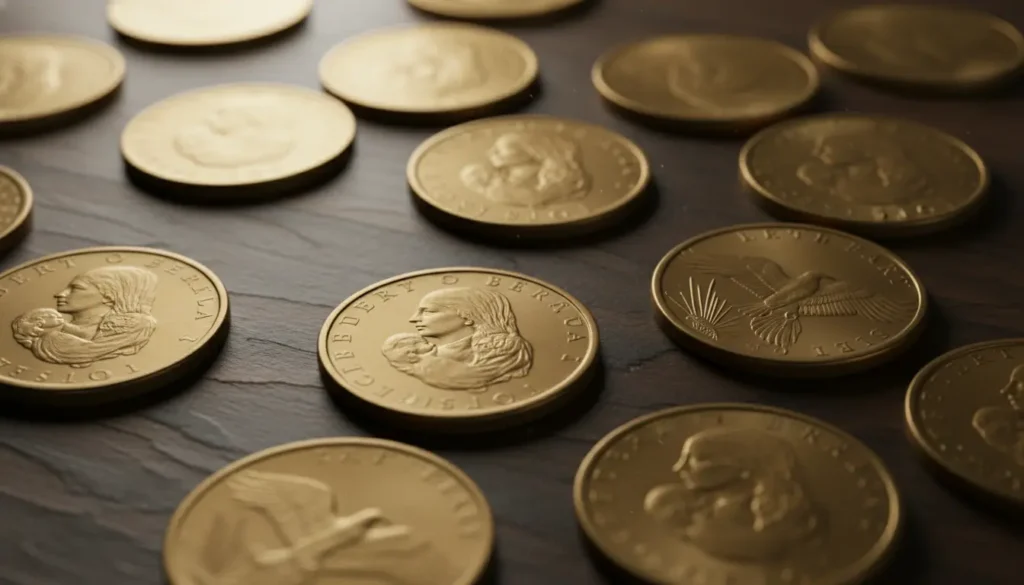
The Sacagawea dollar was introduced in 2000 and quickly became a target for collectors watching for unusual minting mistakes. Some error types are now attracting higher premiums as collectors seek scarce varieties. This guide explains common Sacagawea dollar errors that are increasing in value and practical steps for identifying and handling them.
Sacagawea Dollar Errors That Collectors Want
Not every mark or scratch makes a coin valuable. Collectors focus on minting errors that are unusual, well-formed, and verifiable. Below are the most sought-after Sacagawea dollar errors that are increasing in value.
Off-Center Strikes
An off-center strike occurs when a coin is not properly aligned between the dies, causing part of the design to be missing. These errors range from slight off-centers to dramatic strikes where large portions of the portrait or eagle are absent.
Value depends on the degree of off-centering, how much of the design is missing, and the overall strike quality. Coins with 20% or more off-centering are typically more valuable to error collectors.
Double Strikes and Double Dies
Double strikes happen when a coin is struck more than once in different positions. A double die is a die error that produces a doubled image on all coins struck by that die. Both types of doubling create a distinct, layered look on lettering or design elements.
Double-struck Sacagawea dollars with clear, separate impressions can command premiums, especially when doubling appears on central design elements like Sacagawea’s profile or the eagle.
Die Breaks and Cuds
Die breaks occur when part of the die fractures during use, creating raised lumps or missing lines on the struck coin. Larger die breaks can form “cuds,” which are curved raised areas where the die piece has broken away.
Cuds and large die breaks on Sacagawea dollars become collectible when they are obvious and repeatable—meaning multiple coins share the same defect from the same die.
Planchet and Mint Mark Errors
Planchet errors include wrong planchet metal, clipped planchets, or lamination defects in the metal. Though rarer, planchet errors on Sacagawea dollars are eye-catching to specialists.
Mint mark errors—incorrect or missing mint marks—also draw interest. While many Sacagawea dollars were produced at multiple mints, a misplaced or doubled mint mark can increase value.
How to Identify Sacagawea Dollar Errors
Follow a simple process to determine whether a Sacagawea dollar error is genuine and potentially valuable. Careful observation and documentation are critical.
- Inspect with magnification: Use a 5x–10x loupe or magnifying glass to check detail and doubling.
- Note the location: Record where the error appears (edge, field, portrait, reverse) and how large it is.
- Compare to known varieties: Use reference guides and online databases for Sacagawea dollar error photos and descriptions.
- Check for circulation damage: Distinguish minting errors from post-mint damage like gouges or environmental corrosion.
- Document with photos: Take clear, well-lit images from multiple angles to show features to buyers or graders.
Grading and Authentication
Authentication by a reputable third-party grading service increases buyer confidence and often raises market value. Key services include PCGS and NGC, which also attribute and grade error coins.
Before submitting, clean nothing on the coin. Cleaning can reduce value and lead to rejection by graders. Instead, package the coin safely and include your documentation and photos.
Real-World Example
A hobbyist discovered an off-center Sacagawea dollar in pocket change and posted images online. After getting feedback from collectors and having the coin authenticated, they sold it at auction for a price well above face value. The sale attracted attention because the coin showed a clean, substantial off-center strike without signs of damage.
This example highlights two practical steps: seek community input early and pursue professional authentication when a coin appears genuinely unusual.
Where to Sell or Buy Sacagawea Dollar Errors
If you think you have a valuable Sacagawea dollar error, choose sales channels that reach serious collectors. Each channel has pros and cons depending on how much effort and fee you accept.
- Online auction sites: Good for reach but expect buyer fees and variable final prices.
- Specialist coin auctions: Higher commissions but access to focused numismatic buyers.
- Local coin dealers or shows: Faster sales and hands-on evaluation, often for lower prices than auctions.
- Direct sale to collectors: Can maximize returns if you build trust or use verified platforms.
Practical Tips for Collectors
- Keep coins in original condition—do not clean or polish.
- Use soft holders or flips and avoid PVC materials that can damage coins over time.
- Document provenance and how you found the coin to add trust for buyers.
- Stay current with reference catalogs and online error-coin groups for price trends.
The Sacagawea dollar was first issued in 2000 and many of the most collectible errors come from early production runs. Early dies and experimental planchets often produce the most interesting varieties.
Final Takeaways
Sacagawea dollar errors that are increasing in value are generally those that are visually dramatic, rare, and well-documented. Off-center strikes, double strikes, die breaks, and planchet anomalies are the primary categories to watch.
Always document unusual coins, avoid cleaning, and consider professional authentication to capture the best market value. With careful identification and the right selling channel, an error Sacagawea dollar can yield a significant premium over face value.