


Sacagawea Dollar vs Kennedy Half Dollar: quick overview
The Sacagawea Dollar and the Kennedy Half Dollar are both modern U.S. coins that tell different chapters of American history. Each coin serves different uses, designs, and appeal to collectors for distinct reasons.
This article compares origin, design, composition, value, and collecting tips for the Sacagawea Dollar and the Kennedy Half Dollar in practical terms. Use the guidance to identify, evaluate, and decide which coin fits your interests or investment goals.
History and purpose: Sacagawea Dollar vs Kennedy Half Dollar
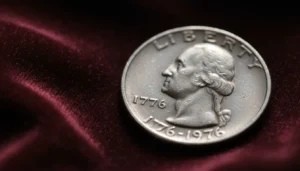
The Kennedy Half Dollar was introduced in 1964 to honor President John F. Kennedy after his assassination. It became popular for its portrait and initially for its silver content.
The Sacagawea Dollar began in 2000 to provide a modern dollar coin with a distinct, golden color and a Native American theme. It was meant to be durable and easily recognized in circulation.
Key historical moments
- Kennedy Half Dollar: Major shifts in silver content and design through the 1960s and 1970s.
- Sacagawea Dollar: Launched in 2000 with a manganese-brass clad giving it a golden appearance.
Design and composition differences
Design often drives collector interest. The Kennedy Half Dollar features a left-facing portrait of John F. Kennedy on the obverse and the presidential seal on many reverses. Over time, special designs and commemorative issues have appeared.
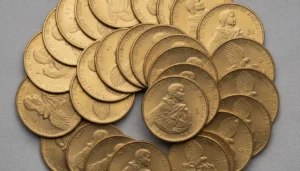
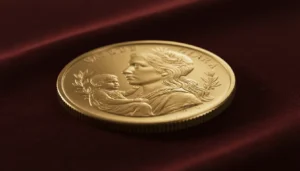
The Sacagawea Dollar shows Sacagawea carrying her infant on the obverse and rotates reverse designs celebrating Native American contributions. The golden color comes from a manganese-brass clad over a copper core.
Material and circulation impact
Material affects both look and intrinsic value. Most Kennedy halves minted in 1964 are 90% silver, giving them bullion value. From 1965 to 1970 some halves used a 40% silver composition, and after 1971 the half-dollar generally used a copper-nickel clad.
Sacagawea Dollars are not silver; they use a copper core with a golden manganese-brass outer layer. That makes them lightweight and resistant to corrosion, but with minimal intrinsic metal value.
Collectibility and market value
Value depends on rarity, condition, mint marks, and precious metal content. Kennedy halves from 1964 can have high base value because of silver content. Certain proof or low-mintage years can be more valuable.
Sacagawea Dollars can be collectible when they feature rare mint errors, low-mintage proofs, or special issues. Typically, circulated Sacagawea coins are worth face value unless an error or collector demand increases their price.
What to look for when assessing value
- Year and mint mark — affects rarity and metal composition.
- Condition — uncirculated or certified coins command premiums.
- Errors and varieties — double dies, off-center strikes, or unique mint marks can raise value.
- Historical context — special releases or commemoratives often attract buyers.
Practical tips for collectors: Sacagawea Dollar vs Kennedy Half Dollar
If you are starting a collection or buying coins, follow a structured approach to reduce risk and build value over time. Decide whether you want historical pieces (Kennedy halves) or modern series and varieties (Sacagawea dollars).
Use these actionable steps to evaluate purchases and build a purposeful collection.
Buying checklist
- Confirm the year and mint mark before purchase.
- Buy certified coins for expensive pieces to ensure grade accuracy.
- Compare current silver prices when buying Kennedy halves from silver years.
- Watch for documented errors and leverage auction results to set price expectations.
Case study: A small collector’s comparison
Maria, a new collector, bought two coins to learn differences: a circulated 1964 Kennedy Half Dollar and a 2000 Sacagawea Dollar. She paid attention to condition and metal content when deciding value.
The Kennedy half had intrinsic silver value plus collector interest, so its market price exceeded face value. The Sacagawea dollar, in circulated condition, was worth face value but offered learning value about modern minting and design variety.
Maria decided to keep the Kennedy for its silver and historical appeal and began looking for Sacagawea proofs and error varieties to expand that part of her collection.
Which coin is right for you?
Choose a Kennedy Half Dollar if you value historical significance and the potential for silver-based intrinsic value. These coins are better if you want pieces tied to mid-20th-century U.S. history.
Choose Sacagawea Dollars if you prefer modern designs, a uniform golden appearance, and collecting series of reverse designs. They are inexpensive to obtain and offer variety with modern minting errors.
Summary comparison
- Historical focus: Kennedy Half Dollar.
- Modern series and visual variety: Sacagawea Dollar.
- Intrinsic silver value: likely with older Kennedy halves (1964 and some 1965–1970 issues).
- Everyday collectibility and lower entry cost: Sacagawea Dollar.
Both coins tell pieces of America’s story through design and material. Understanding those differences helps collectors make informed choices that match their goals and budgets.