

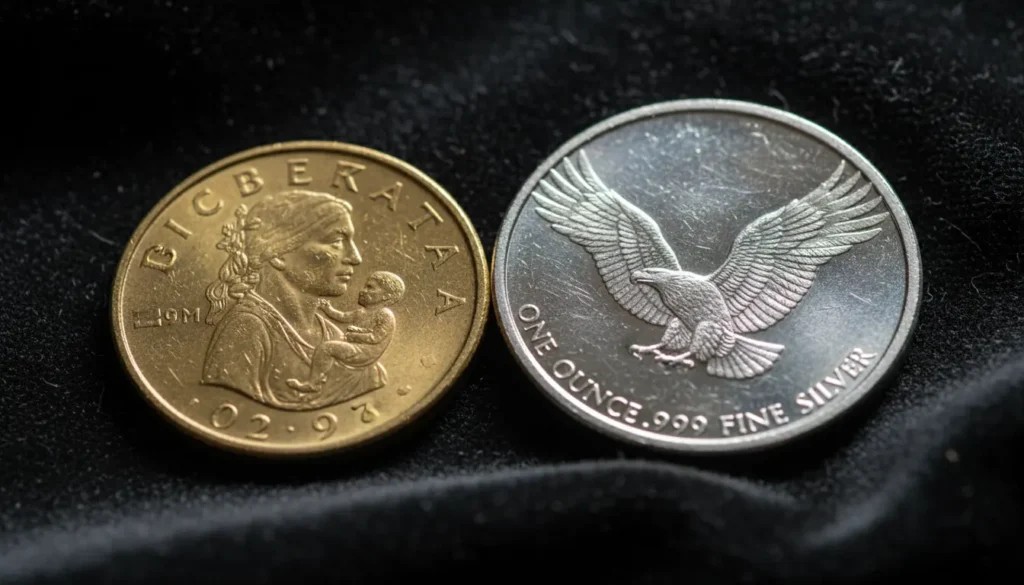
The Sacagawea dollar is familiar to many collectors and casual holders as the golden-colored U.S. $1 coin introduced in 2000. But when people ask about a “silver” or “gold” Sacagawea, they can mean very different things. This guide explains what each term usually refers to and how to judge which is worth more today.
Silver vs Gold Sacagawea: what people mean
When collectors say “silver Sacagawea” they are usually referring to privately produced silver rounds or commemorative pieces that copy the Sacagawea design. These are not legal-tender U.S. coins and are generally struck in .999 silver or sterling by private mints.
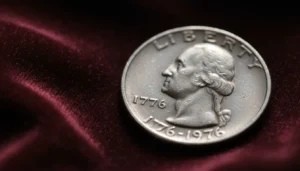
When people say “gold Sacagawea,” they might mean the standard Sacagawea dollar’s gold color (a manganese-brass clad coin) or gold-plated novelty pieces. Genuine U.S. Mint Sacagawea dollars are not made of gold metal; they are a golden-colored copper alloy.
Key fact: composition of the U.S. Sacagawea dollar
The circulating Sacagawea dollar (2000–present) is a manganese-brass clad coin over a pure copper core. It contains no silver and no gold metal content. That means the face-value $1 coin’s melt value is not tied to precious metals.
The Sacagawea dollar’s golden look comes from a manganese-brass alloy, not real gold. Any Sacagawea piece that is truly silver or gold is usually a privately produced round or special medal, not standard U.S. circulating coinage.
Which is worth more today: silver or gold Sacagawea?
The short, practical answer: a genuine silver Sacagawea-style round made of .999 silver will usually be worth its silver melt value plus a small premium. A gold-plated Sacagawea with no actual gold content will be worth only a small collector or novelty price. True gold items (if privately struck in actual gold) will be worth their gold content plus a collector premium.
Value drivers to compare:
- Metal content and purity (e.g., 1 troy oz .999 silver vs no precious metal).
- Weight (troy ounces or grams) and verified assay.
- Authenticity and provenance (U.S. Mint vs private mint).
- Demand, rarity, and condition (collector interest).
- Market spot price of silver and gold at sale time.
Examples of typical values
– A 1 troy ounce .999 silver round with a Sacagawea design will generally trade close to spot silver plus dealer premium.
– A Sacagawea dollar that is merely gold-colored (standard issue) is worth face value unless it is an error or rare variety.
– A gold-plated Sacagawea novelty commonly sells for a few dollars to a few tens of dollars depending on condition and listing visibility.
– A privately struck item that contains real gold (for example, a 1/10 oz .999 gold Sacagawea-style round) will be worth the gold melt value plus any collector premium.
How to tell if a Sacagawea piece is real silver or gold
Follow these practical steps to identify metal and estimate value.
- Check for hallmarks: Private mints usually stamp purity (.999 silver, .999 gold) and weight on the edge or reverse.
- Weigh the piece: Compare to expected weight for claimed metal content using a precise scale.
- Magnet test: Precious metals are non-magnetic; a strong attraction indicates base metal core or plating over a magnetic base.
- Acid or electronic tester: Consider an XRF assay or professional test for verified composition when value is significant.
- Look up completed sales: Search coin marketplaces and auction records for similar items to see market prices.
When to get professional authentication
Get a coin professionally graded or assayed if the piece claims meaningful gold content (for example, 1/10 oz or 1/4 oz gold) or if the asking price appears high. An authenticated slabbed coin or assay report protects you when buying or selling.
Practical selling tips
If you decide to sell a silver or gold Sacagawea-style piece, follow these steps to get the best net price:
- Document weight, purity marks, and photos of both sides.
- Check current spot prices for silver and gold; set realistic expectations for melt vs numismatic value.
- Use multiple channels: local coin shops for quick sales, online marketplaces or auction houses for higher returns.
- Consider grading for high-value pieces to increase buyer confidence.
Case study: a small real-world example
A collector purchased a 1 oz silver Sacagawea-style round from a reputable bullion dealer. The round was marked .999 silver and weighed 31.1 grams. The buyer paid spot price plus a 6% dealer premium. After a year of holding the round, the collector sold it online; the final sale equaled spot plus a smaller 3% premium, netting a small gain tied to silver price movement rather than rarity.
Contrast that with a different seller who listed a gold-plated Sacagawea dollar on an auction site. Because the coin had no measurable gold content, it sold to a novelty buyer for under $20. This illustrates that appearance alone (gold-colored) does not equal precious-metal value.
Bottom line: how to decide which is worth more
If a Sacagawea-style piece is truly silver or gold, its intrinsic metal value (based on weight and purity) is the baseline of worth. Privately minted silver rounds typically trade by metal value. Gold pieces with verified gold content will be worth more per ounce because gold is more valuable than silver by weight.
If a Sacagawea coin is merely gold-colored or plated, its value is usually low unless it is a rare error or has collector demand unrelated to metal content. Always verify metal content, documentation, and recent comparable sales before assigning value.
Use these practical checks before buying or selling: confirm weight and purity, consult spot prices, and get professional authentication for higher-value pieces. That approach will tell you whether a silver or gold Sacagawea item is worth more today.