

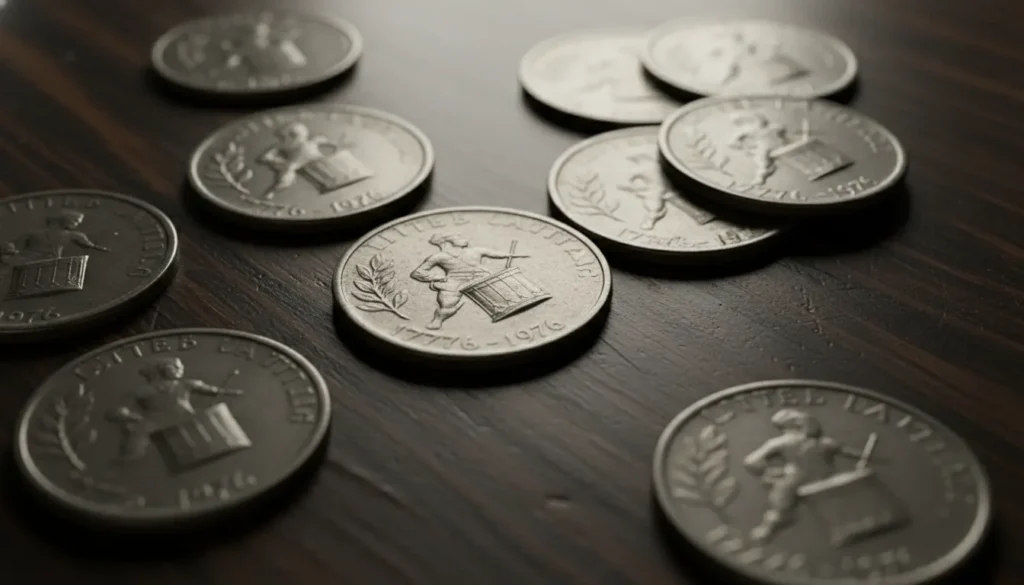
The 1976 Bicentennial quarter is common in pocket change, but some examples are worth significantly more than face value. This guide describes the four types of 1976 Bicentennial quarters that typically command the highest prices, explains how to spot them, and offers practical steps to determine if you have one worth checking further.
Top 4 Most Valuable 1976 Bicentennial Quarters
Below are the four categories of 1976 Bicentennial quarters that collectors and dealers target. Each listing explains why the piece can be valuable and what to look for.
1. 1976-S Silver Proof Quarters (40% Silver)
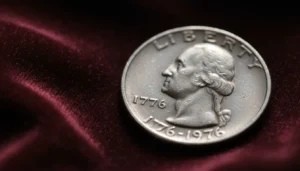
Silver proof quarters were produced for proof sets and contain 40% silver. These coins are sought after by both coin collectors and silver buyers.
- Key features: Satin or mirrored fields, sharp devices, and an S mintmark on the obverse.
- Why valuable: Silver content plus proof finish. Higher grade proofs (PR67–PR70) are most desirable.
- Typical range: Common grades are modestly priced; top-graded proofs can sell for hundreds or more depending on market demand.
2. High-Grade Mint State 1976 Bicentennial Quarters (MS67+)
Uncirculated quarters in top mint state grades are valuable because most circulated examples show wear. A 1976 quarter graded MS67, MS68, or higher can command a premium from collectors seeking near-perfect pieces.
- Key features: Full luster, no wear on raised surfaces, sharp contact marks if any.
- Why valuable: High grade is rare for a widely circulated year; grade drives price more than mint.
3. Major Error Quarters (Off‑Center, Broadstrike, Double Die)
Error coins can be very collectible. Off‑center strikes, broadstrikes, and strong doubled dies on the obverse or reverse attract specialist buyers.
- Key features: Misalignment of design, doubled lettering or devices, striking defects that are clearly visible.
- Why valuable: Dramatic, collectible errors are scarce and eye-catching; value depends on severity and attractiveness.
4. Proof Clad Deep Cameo (DCAM) 1976-S Quarters
Clad proofs with extremely strong contrast between frosted devices and mirrored fields—called Deep Cameo or DCAM—are valued by proof collectors. The clad proofs are copper-nickel and separate from the silver proofs in value tiers.
- Key features: Strong cameo contrast and an S mintmark. Higher proof grades increase value substantially.
- Why valuable: Visual appeal and rarity of high-grade deep cameo proofs among a large population of proofs.
How to Identify Valuable 1976 Bicentennial Quarters
Start with simple checks that you can do at home. These quick tests will help you separate ordinary coins from candidates worth further research or grading.
- Look for the mintmark: S = San Francisco proof; D = Denver; no mintmark = Philadelphia. Silver proofs will have an S and a proof finish.
- Examine luster and wear: Use a bright lamp and magnifier. No wear and original luster point toward a mint state coin.
- Watch for anomalies: Off‑center strikes, doubling, or odd planchet features are signs of errors that deserve inspection.
- Check edge and weight: Silver proofs will have a different feel than clad pieces. If unsure, weigh the coin or compare to a known clad quarter.
What Affects Value of 1976 Bicentennial Quarters
Several factors combine to determine market value. Understand these before you try to price or sell a coin.
- Grade/condition: The single biggest factor. Professional grading (PCGS, NGC) often multiplies value.
- Rarity of the variety: Certain errors or proof types are produced in smaller numbers.
- Eye appeal: Clean fields, strong strike, and contrast matter to collectors.
- Metal content: Silver proofs have intrinsic silver value as well as collector value.
The Bicentennial quarter was produced only with the dual date 1776–1976 and a special reverse showing a colonial drummer. No regular quarters were dated 1975 or 1977 in widespread circulation.
How to Confirm and Sell a Valuable 1976 Bicentennial Quarter
If you think you have a valuable 1976 quarter, follow these steps to confirm and realize its value.
- Document condition with clear photos under good light from multiple angles.
- Compare to trusted guides and price lists for silver proofs, mint state levels, and common error types.
- Consider professional grading for any coin you expect to be worth several hundred dollars or more.
- Get multiple offers: use reputable dealers, auction houses, and online coin marketplaces to compare prices.
Real-World Example
A collector inherited a set of vintage proof sets and found a 1976-S quarter with deep cameo contrast and sharp strike. After checking reference guides and photographing the coin, they submitted it to a major grading service. The piece received a proof grade in the high 60s with Deep Cameo designation, and it sold through an auction platform for a price notably above the silver melt value and higher than standard proofs.
The key steps in that sale were careful documentation, professional grading, and using an auction channel where proof collectors bid competitively.
Quick Checklist Before You Sell or Grade
- Confirm mintmark and finish (S for proofs).
- Use a loupe to check for wear and signs of cleaning.
- Get opinions from two reputable dealers before paying for grading.
- Keep coins in original packaging or inert holders to preserve condition.
If you suspect you own one of the top 4 most valuable 1976 Bicentennial quarters—especially a silver proof, a top-grade mint state, or a striking error—take careful, documented steps before selling. Proper grading and choosing the right market will maximize what you receive.