

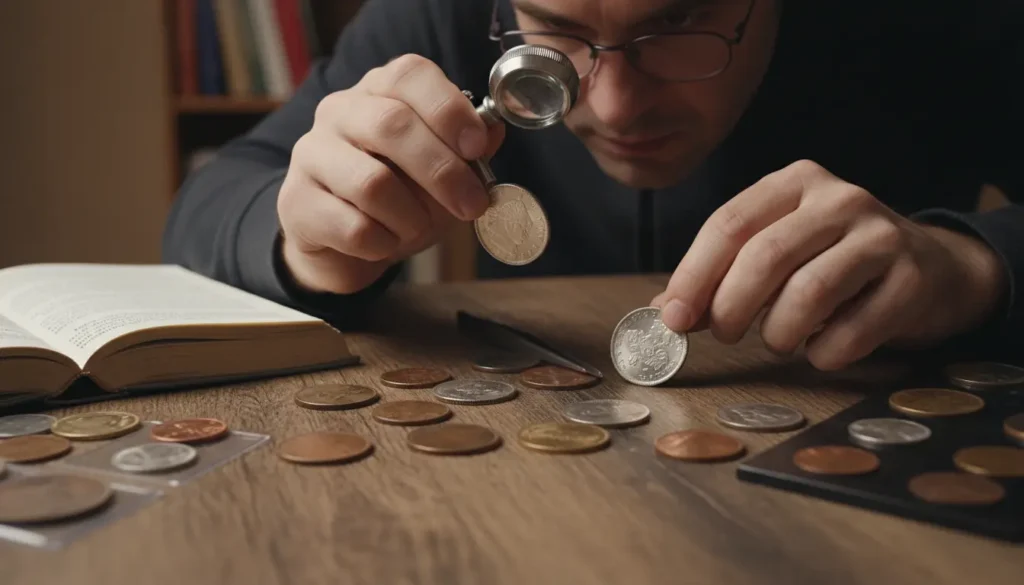
Grading valuable coins is a technical skill that affects price and collectibility. Small errors in judgment or handling can reduce a coin’s market value significantly. This guide highlights common mistakes when grading valuable coins and gives practical steps to avoid them.
Why careful grading valuable coins matters
Grading sets a coin’s condition, rarity perception, and sale price. Professional grading by reputable services can add buyer confidence and liquidity. However, mistakes during grading or before sending coins to a service can nullify those benefits.
Common Mistake 1: Poor handling and storage before grading valuable coins
Touching a coin’s surface with bare fingers leaves oils and acids that cause spots and long-term damage. Even clean hands can transfer contaminants that alter luster and color.
- Always use nitrile gloves or hold coins by the rim.
- Store coins in inert holders like Mylar flips or acid-free envelopes before grading.
- Avoid PVC-containing plastics that can produce green or sticky residues.
Common Mistake 2: Attempting home cleaning before grading valuable coins
Many collectors clean coins to improve appearance, but cleaning often causes scratches, hairlines, or altered surfaces. Grading services may reclassify a cleaned coin as ‘environmentally damaged’ or ‘improperly cleaned’.
- Never polish or use chemical dips on valuable coins.
- If you suspect contaminants, consult a professional conservator or grading service first.
Common Mistake 3: Misreading grading standards for valuable coins
Grading scales (like the 70-point scale) have subtle differences between adjacent grades. Overconfident self-grading can lead to overpricing or underselling coins.
- Study official grading guides and photographic references from major grading services.
- Understand key grade indicators: strike, luster, surface preservation, and eye appeal.
Common Mistake 4: Ignoring strike and variety details when grading valuable coins
Collectors often focus only on surface condition and miss critical strike issues or die varieties. Some varieties carry premium value that outweighs minor surface defects.
- Examine the coin for mintmark placement, doubling, or die cracks.
- Use reference books or online attribution resources to confirm variety.
Common Mistake 5: Overreliance on photographs when grading valuable coins
Photos can misrepresent color, luster, and surface flaws due to lighting and resolution limits. Many buyers and graders prefer in-hand inspection.
- When selling online, provide multiple high-resolution images with neutral lighting.
- Include scale references and both obverse and reverse images.
Common Mistake 6: Not understanding grading service policies for valuable coins
Different grading companies apply policies on cleaning, alterations, and attribution. Sending a coin without checking those policies risks unexpected labels or lower grades.
- Compare grading fees, turnaround times, and population reports for each service.
- Check whether a service assigns designations like ‘Details’ or ‘Altered’ for questionable coins.
Checklist before submitting coins for grading valuable coins
- Handle coins properly using gloves and hold by rims.
- Document provenance and prior sales receipts if available.
- Research the expected grade range and variety to avoid unrealistic submissions.
- Choose a grading service that matches the coin’s market and the collector’s needs.
Coins cleaned with household items like baking soda or vinegar often show microscopic damage that grading services detect, which can drop value dramatically even if the surface looks improved to the naked eye.
Real-world example: Misgrading a key date dime
A collector purchased a 1916-D Mercury dime from an online auction labeled as ‘great eye appeal’. The buyer cleaned the coin gently at home, removed a few spots, and later submitted it for grading. The grading service flagged the coin as ‘improperly cleaned’ and issued a ‘Details’ grade rather than a numerical grade.
Result: The market value dropped by over 40 percent. The collector learned that professional grading values original surfaces more than short-term cosmetic improvements. The coin retained historical significance, but the altered surface reduced resale potential.
Tips to avoid the top mistakes when grading valuable coins
- Educate yourself: Read grading manuals, attend workshops, and join numismatic clubs.
- Use reputable third-party services for final grading and authentication.
- Keep records: photographs, purchase invoices, and provenance can support grade disputes.
- When in doubt, seek a second opinion from experienced dealers or certified graders.
Conclusion: Protect value when grading valuable coins
Minimizing mistakes when grading valuable coins protects both historical integrity and market value. Proper handling, realistic self-assessment, and knowledge of grading policies reduce the risk of costly errors.
Take a methodical approach: document, preserve, and consult professionals when needed. That discipline will help you maintain or increase the value of your coin collection over time.